
OTT Graphics, Explained: Broadcast Quality Without the Truck
You'll see the phrase 'OTT graphics' in broadcast job listings, sports-tech marketing, and creator tools alike, usually without anyone explaining it. It matters to fan channels for one reason: OTT graphics are how a football watchalong streamed from a bedroom ends up with the same visual grammar as Sky Sports. Here's what the term actually means and how the technology works.
What does OTT mean?
OTT stands for 'over the top': video delivered over the open internet rather than through traditional broadcast infrastructure like satellite or cable. YouTube, Twitch, and every streaming platform you use are OTT platforms. The term comes from the industry's view that these services ride 'over the top' of the networks that used to control distribution.
So what are OTT graphics?
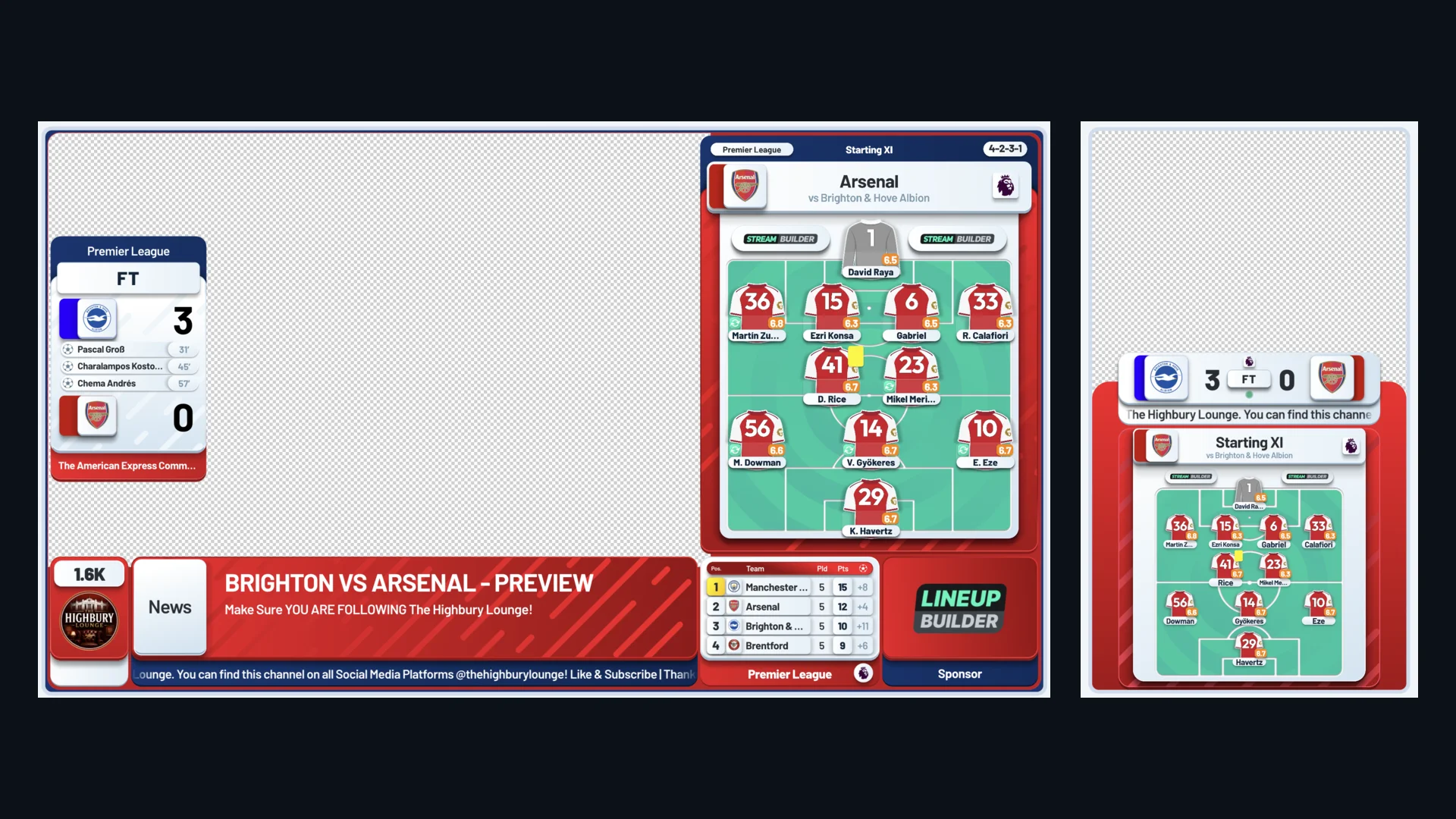
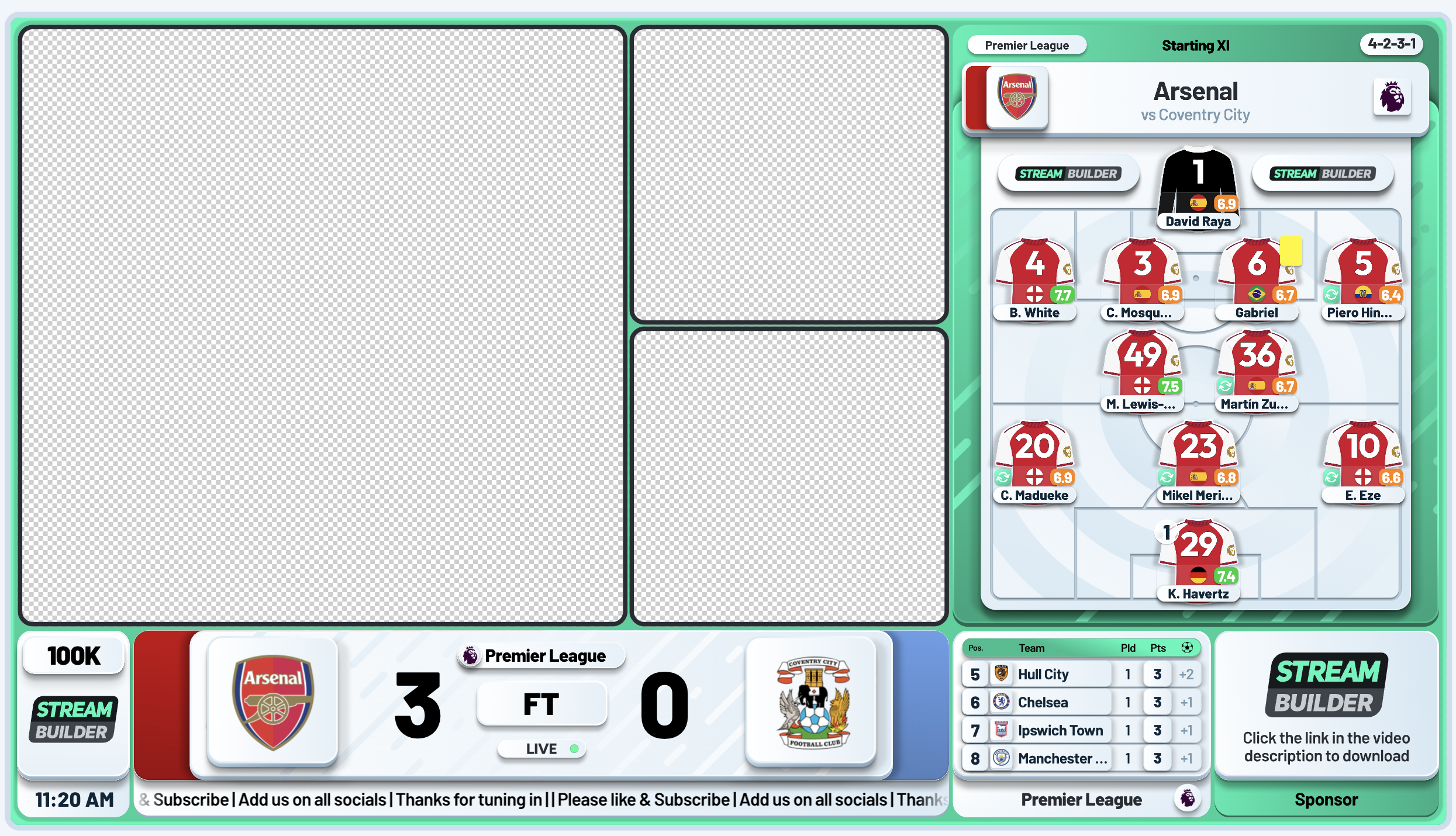
OTT graphics are broadcast-style on-screen graphics built for internet streaming. Traditional TV graphics are rendered by dedicated hardware in a gallery or an outside-broadcast truck, operated by a graphics team. OTT graphics achieve the same result in software: they render in a browser, layer over your video as a source in your streaming tool, and update from live data feeds. Same score bugs, lower thirds, and tickers; none of the truck.
How they work under the hood
- The graphics are a web page, rendered with the same technology as any website.
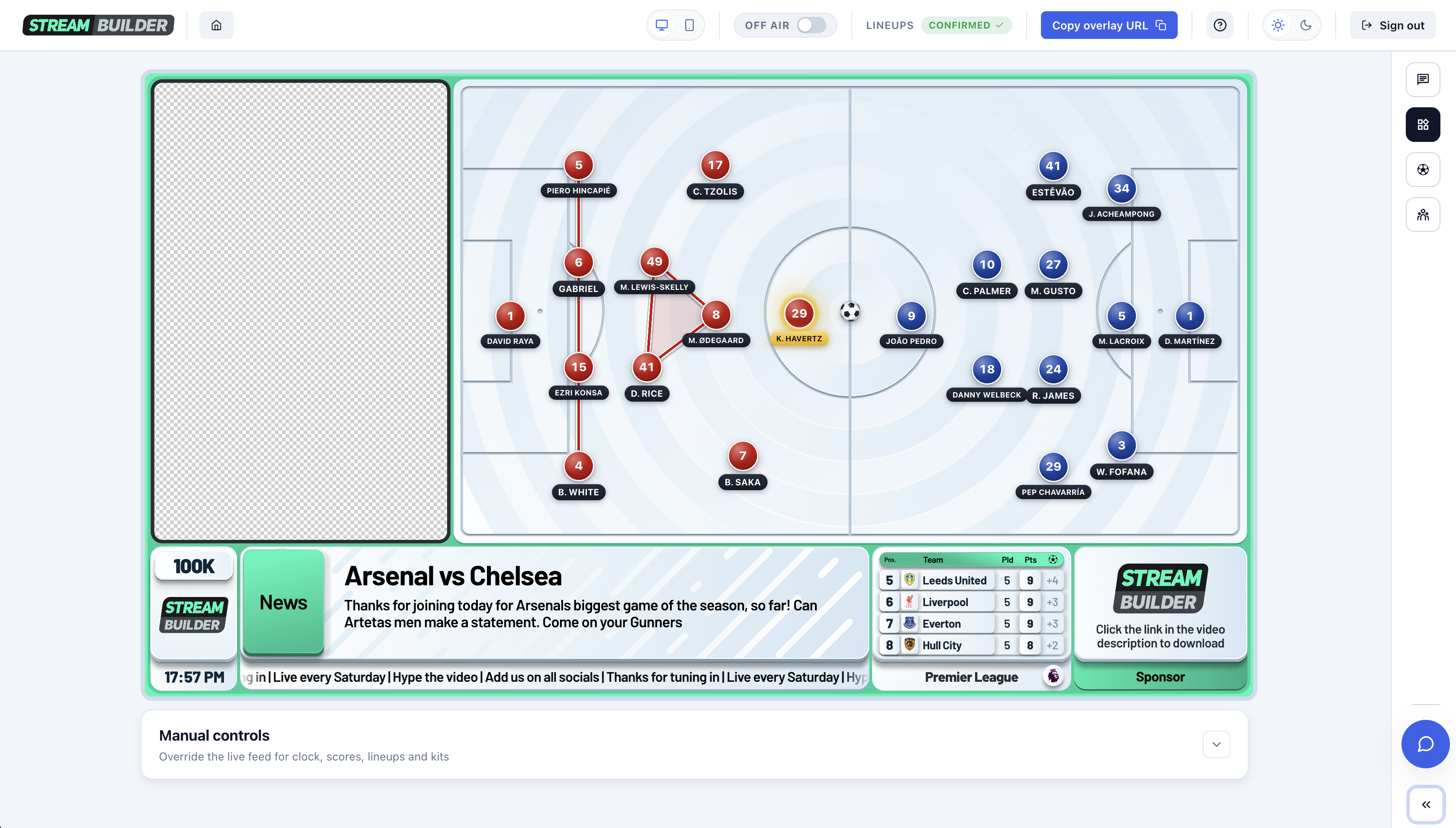
- Your streaming software (OBS, StreamYard, Streamlabs) loads that page as a browser source with a transparent background, layered over your camera.
- A live data feed drives the content: scores, the match clock, lineups, stats, and events update the moment they happen.
- Because it's all one URL, the whole system is portable across tools and machines.
OTT graphics vs static overlays
A static overlay is a picture: a PNG frame with your branding that never changes. OTT graphics are a system: the frame plus a live score bug, self-updating lineups, in-game stats, a news ticker, lower thirds, and a sponsor slot, all moving with the match. Viewers may not name the difference, but they feel it instantly. One reads as a decorated webcam; the other reads as a broadcast.
Why this levels the field for fan channels
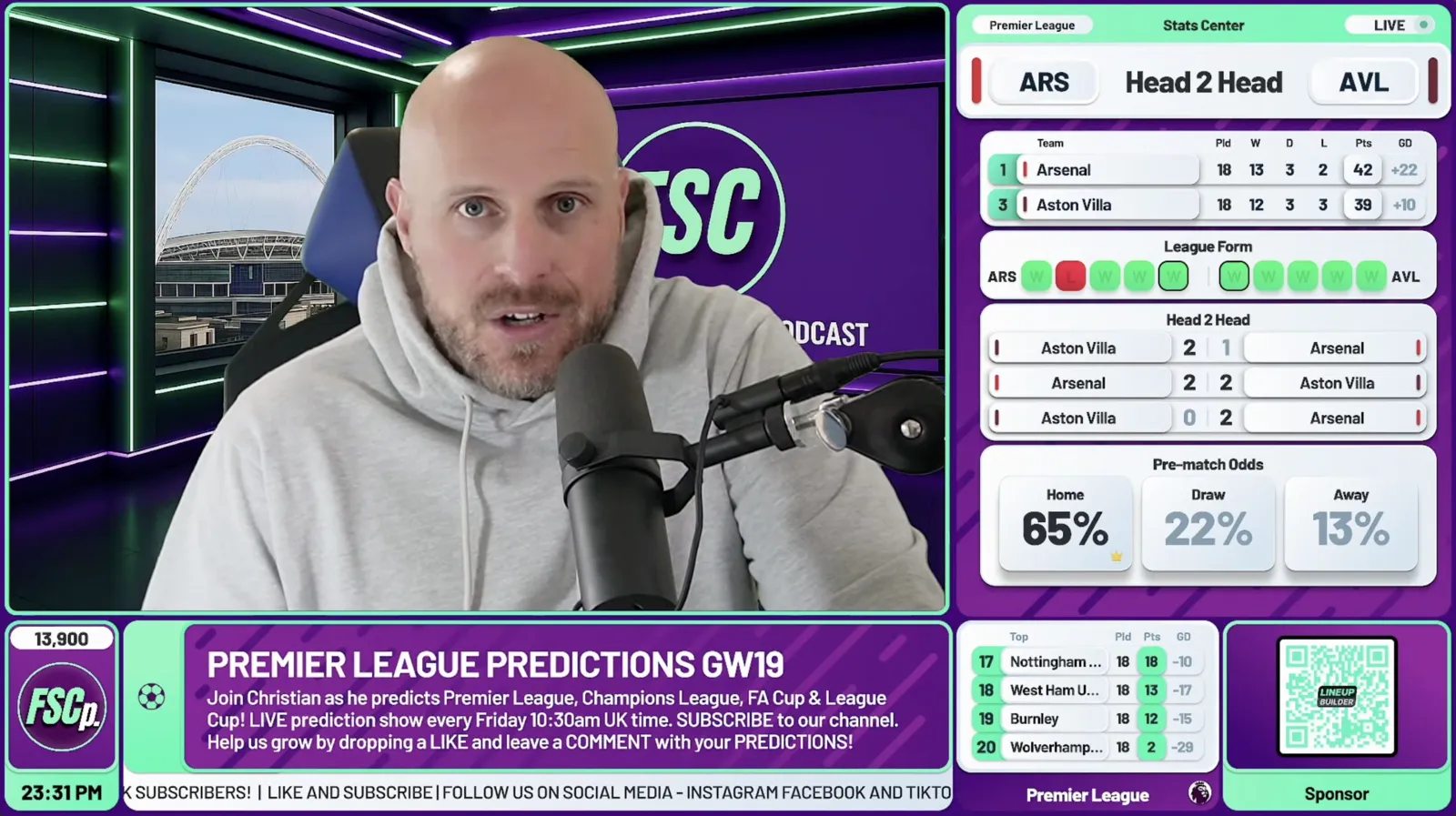
Broadcast graphics used to be gated behind broadcast budgets. Browser rendering and live data feeds removed the gate: a fan channel can now run the same class of graphics as a television production for the cost of a subscription rather than a truck. The Footie Social Club Predicts is the proof: a bespoke head-to-head widget pulling live standings, form, and win probabilities gave a prediction show broadcast-standard presentation, and it unlocked collaborations with major YouTubers off the back of it.
“The level of quality in the stream is amazing and makes such a difference than just a standard overlay!”
Jamie Storey, The Football Storey
Frequently asked questions
What does OTT stand for?
'Over the top': video delivered over the open internet rather than through satellite or cable. YouTube and Twitch are OTT platforms, so graphics built for streaming on them are OTT graphics.
Are OTT graphics different from a stream overlay?
An overlay can be a static image. OTT graphics are a live system: browser-rendered, data-driven graphics (score bug, lineups, stats, tickers) that update in real time during the match.
Do I need special hardware for OTT graphics?
No. They render in a browser and load into OBS, StreamYard, or Streamlabs as a browser source. If your machine can run your stream, it can run the graphics.
Why do fan channels use OTT graphics?
Credibility and clarity. Viewers orient themselves with the score bug and stats, the stream reads as a broadcast rather than a webcam, and sponsors get a placement that's actually worth paying for.